
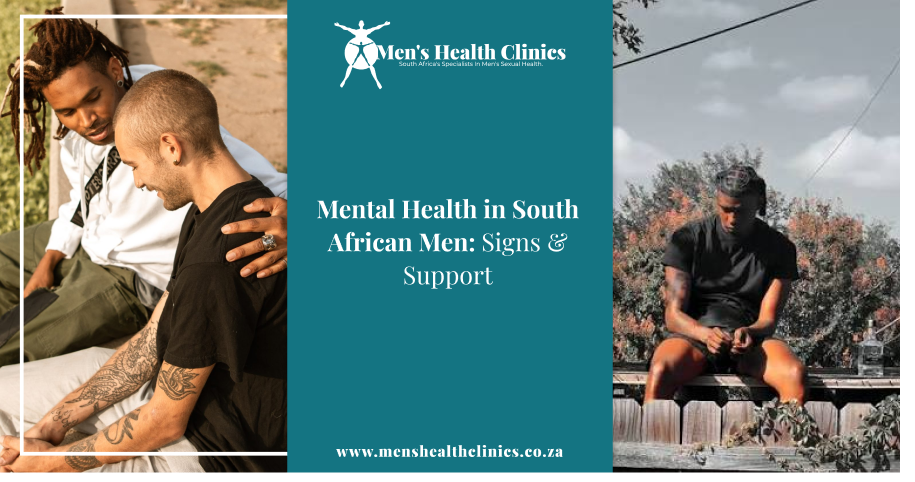
The short answer: mental health in South African men has difficulty which does not always look like sadness. A man may first notice irritability, poor sleep, loss of interest, constant worry, physical tension, withdrawal, heavier alcohol or drug use, risky behaviour, reduced work performance or sexual-health changes. The useful questions are whether the pattern is different from his usual baseline, how long it has lasted, how much it is disrupting daily life and whether anyone is unsafe. A checklist cannot diagnose the cause, but it can show when a conversation, professional assessment or urgent response should not be delayed.
If there may be immediate danger
If you may harm yourself or someone else, have already acted, cannot stay safe, are severely confused or are hearing or seeing things that direct dangerous action, call 112 from a South African cellphone, call 10177 for an ambulance, or go to the nearest emergency department now. You can also call the SADAG Suicide Crisis Helpline on 0800 567 567. Do not wait for a routine clinic booking, online reply or wellness consultation.
The Scale of the Problem: Recognition Matters More Than a Headline Number
Depressive and anxiety disorders are common worldwide, and suicide is a serious public-health concern. However, a national or global statistic cannot tell whether one person has a condition or how urgent his situation is. South African estimates can also differ by dataset, definition, age group and year. It is safer to avoid dramatic numbers that cannot be traced to a current source.The practical problem is that distress may be missed until work, health, relationships or safety have deteriorated. A man may call the experience “pressure,” “burnout,” “anger,” “not sleeping,” “drinking too much” or “not feeling like myself” long before he uses a mental-health term. Those descriptions are still useful clinical information.Change from baseline
What is different in mood, thinking, sleep, behaviour, substance use or connection with other people?
Persistence
Is it easing with rest and support, or continuing across days and weeks?
Impact
Is it interfering with work, study, parenting, relationships, self-care, sex, money or decision-making?
Safety
Are there thoughts of death, self-harm, violence, severe intoxication, dangerous impulsivity or an inability to stay safe?
What Mental Health Actually Means: Stress, a Possible Condition or a Crisis
Mental health includes emotional, psychological and social wellbeing. It affects how a person experiences stress, relates to other people, makes decisions and functions. Difficult days and normal emotional responses are not automatically disorders. Grief, disappointment, fear and anger can be understandable responses to difficult events.| Pattern | What it may look like | Sensible next step |
|---|---|---|
| Short-term strain | A clear stressor, difficult feelings and disrupted sleep, but daily functioning remains mostly intact and the pattern begins to ease | Support, rest, routine, practical problem-solving and observation; seek care if it persists or worsens |
| Possible mental-health condition | Persistent or recurring changes in mood, anxiety, interest, thinking, behaviour or substance use that cause distress or impair functioning | Arrange assessment with an appropriate health or mental-health professional; do not self-diagnose from one symptom |
| Urgent deterioration | Suicidal thoughts, escalating self-harm, inability to care for basic needs, severe agitation, marked confusion, hallucinations or dangerously reduced need for sleep with reckless behaviour | Same-day professional or crisis assessment; use emergency care when safety cannot be maintained |
| Immediate crisis | An attempt, current intent or plan, access to a chosen means, threats of serious violence, severe intoxication with danger or inability to stay safe | Call 112 or 10177, or go to the nearest emergency department now |
The Conditions That Most Affect SA Men: Notice Patterns, Not Stereotypes
Men can experience the same range of mental-health conditions as anyone else. Some men describe emotions directly; others first report physical, behavioural, work or relationship changes. Irritability or alcohol use can accompany distress, but neither proves depression. Chest tightness can occur with anxiety, but it can also need medical assessment. The pattern and context matter.Depression
Possible signs include persistent low or empty mood, loss of interest or pleasure, hopelessness, guilt or low self-worth, poor concentration, altered sleep or appetite, low energy and thoughts of death. Some men may also become irritable, withdrawn, emotionally flat or unusually reckless. Depression is diagnosed from a fuller assessment—not from a personality change or one difficult week.Anxiety Disorders
An anxiety disorder involves fear or worry that is difficult to control, persistent and disruptive. Restlessness, tension, irritability, poor concentration, nausea, palpitations, sweating, trembling, sleep difficulty, avoidance or a sense of impending danger may occur. New chest pain, fainting, severe breathlessness or an irregular heartbeat should not automatically be labelled anxiety.Stress- and Trauma-Related Conditions
After violence, abuse, an accident, bereavement or another traumatic event, a person may have intrusive memories, nightmares, avoidance, numbness, hypervigilance or strong reactions to reminders. Not every reaction becomes post-traumatic stress disorder. Persistent symptoms, functional impairment, self-medication or danger deserve assessment by someone trained in trauma-informed care.Substance Use Disorders
Alcohol, cannabis, stimulants, sedatives or other substances may be used to sleep, calm down, feel confident or avoid memories. Warning patterns include needing more, losing control, using despite harm, withdrawal symptoms, hiding use, unsafe sex, aggression, missed responsibilities or combining substances with medicines. Sudden withdrawal from heavy alcohol or sedative use can be medically dangerous; seek professional advice instead of stopping abruptly without a plan.Other patterns that need proper assessment
Markedly reduced need for sleep with unusually high energy, fast speech, grand ideas, spending or sexual risk may indicate a manic episode. Hallucinations, fixed false beliefs, severe confusion or disorganised behaviour may indicate psychosis or another medical problem. These require prompt professional assessment and urgent care when safety or judgement is impaired.
Check Physical Health, Medicines, Sleep and Supplements Too
Low mood, anxiety, fatigue, poor concentration, irritability and reduced libido can have more than one contributor. A clinician may consider sleep deprivation or sleep apnoea, thyroid disease, anaemia, chronic pain, infection, diabetes, neurological illness, hormone problems, medication effects, alcohol or drug use, and withdrawal. Testing should be targeted to the history and examination rather than sold as the same large panel to every man.Bring a complete list of prescribed medicines, over-the-counter products, gym products, traditional remedies, cannabis, alcohol and supplements. Do not stop an antidepressant, anxiety medicine, sleep medicine, steroid, hormone or other prescribed treatment because of something read online. Sudden changes can cause withdrawal, recurrence or other harm; discuss them with the prescriber.“Natural” does not mean interaction-free. Some herbal or nutritional products can worsen sedation, agitation, blood pressure, bleeding risk or medicine effects. A naturopathic review may help document product use and general wellness factors, but diagnosis, psychotherapy, psychiatric prescribing and medical monitoring remain with appropriately registered professionals.Why SA Men Don’t Seek Help—or Seek It Late
There is no single South African male experience. Help-seeking can be shaped by cost, transport, service availability, language, privacy, family expectations, previous discrimination, fear about work, cultural beliefs, uncertainty about the first step or a bad earlier healthcare experience. A man may also not recognise that sleep, anger, alcohol, pain or sexual difficulty could be connected with mental wellbeing.The Masculinity Trap
Messages such as “handle it alone,” “do not show weakness” or “provide at any cost” can make asking for help feel like failure. These messages are not shared by every culture, family or man, and they are not fixed traits. Reframing help as a practical safety and performance decision can make the first conversation easier.Symptom Misidentification
Depression may be mistaken for laziness, anxiety for a heart problem, trauma for anger, or burnout for personal weakness. The opposite error also matters: a physical condition should not be dismissed as psychological without appropriate assessment. A concise record of onset, pattern and function helps reduce both mistakes.The Healthcare Avoidance Pattern
When healthcare has only been used for emergencies, it may not be obvious that a local clinic or GP can be a starting point. You do not need to know the diagnosis or select the perfect specialist before asking for help. Start by describing what changed, how long it has lasted, what it is disrupting and whether there are safety concerns.A plain-language opening sentence
“For the past ___ days or weeks, I have noticed ___, it is affecting ___, I have been using ___ to cope, and I am / am not having thoughts of harming myself or someone else.”
What Good Mental Health Support for Men Looks Like
Good support does not need to be emotionally vague or judgmental. It should identify the main problem, check safety, agree on practical goals, respect language and culture, explain confidentiality and its safety limits, consider physical health and substance use, and create a follow-up plan.| At a useful first assessment | Questions to ask |
|---|---|
| Safety is checked directly | What should I do tonight if thoughts worsen, and who can I contact? |
| The professional’s role is clear | What is your registration category, and which parts of assessment or treatment are within your scope? |
| Physical and substance factors are considered | Do any symptoms, medicines, supplements or withdrawal risks need medical review? |
| A plan is explained | What is the first goal, when will progress be reviewed, and what would change the plan? |
| Handover responsibility is named | If I need another professional, who makes the referral and who follows up? |
Choose the Right Mental-Health Care Route in South Africa
| Route | Useful for | Verify |
|---|---|---|
| Local clinic, community health centre or GP | First assessment, physical contributors, medicine review, risk check and referral | What happens next, referral destination and how urgent changes are handled |
| Psychologist or registered counsellor | Assessment and psychological intervention within the person’s registered category and competence | HPCSA registration, approach, confidentiality, fees and crisis process |
| Psychiatrist | Medical assessment and treatment of severe, complex or medication-requiring mental-health conditions | Medical and specialist registration, medication plan and follow-up responsibility |
| Substance-use service | Assessment of harmful use, dependence, withdrawal risk, rehabilitation options and family support | Clinical oversight, detoxification safety, programme content, costs and aftercare |
| Employer assistance, medical-aid network or support group | A possible access point for counselling, referral or peer support | Confidentiality, session limits, provider credentials and emergency boundaries |
| Emergency service or emergency department | Immediate danger, attempt, severe intoxication, psychosis, mania-like risk or inability to stay safe | Do not delay emergency care to compare routine providers |
Mental Health and Sexual Health Can Affect Each Other
Low mood, worry, trauma, relationship pressure, sleep loss, alcohol, medicines and performance anxiety can influence desire, arousal, erections and ejaculation. Sexual difficulty can also increase shame, conflict or avoidance. This connection does not prove that a sexual symptom is “all in the mind.” Cardiovascular, metabolic, neurological, hormonal, medicine-related and other physical contributors may need assessment.Recurring erection difficulty should be assessed on its own merits, especially when it is new, persistent or accompanied by other health changes. The separate premature-ejaculation assessment guide explains why timing, control, distress, context and erection function must be considered together. The low-testosterone guide explains why symptoms alone cannot confirm a hormone deficiency.Where relationship or performance pressure is prominent, an appropriately qualified psychosexual or mental-health professional may help. Severe depression, trauma, substance dependence, psychosis, mania or self-harm risk requires a mental-health or emergency route—not ordinary sexual-health coaching.Private Mental-Health Self-Check for South African Men
Answer privately based on recent days and weeks. This is educational and non-diagnostic. It is not a validated screening score, cannot name a condition and does not replace personalised assessment.
- Have my mood, interest, energy, sleep, appetite or concentration changed from my usual pattern?
- Am I more irritable, angry, numb, restless, withdrawn or reckless than usual?
- Is worry, fear, panic or tension difficult to control or causing avoidance?
- Has a traumatic event left me with nightmares, intrusive memories, avoidance or constant alertness?
- Am I using more alcohol, cannabis, pills or other substances to sleep, cope, feel confident or forget?
- Are work, study, parenting, relationships, money management, self-care or sexual wellbeing being affected?
- Have I had several days of very little sleep with unusually high energy, fast thoughts, spending or other risky behaviour?
- Have I heard or seen things others do not, felt severely confused, or become convinced of something that others say is not real?
- Have I wished I would not wake up, thought about death or self-harm, made a plan or taken steps toward one?
- Can I identify one person or service I would contact if my safety or judgement worsened tonight?
How to interpret the pattern
Immediate danger or inability to stay safe: use emergency care now. Call 112 or 10177, go to the nearest emergency department and involve a trusted person if safe.
Suicidal thoughts without immediate intent, hallucinations, mania-like changes, escalating substance use or major functional loss: seek same-day professional or crisis assessment. Do not wait for a routine wellness appointment.
Several changes that persist, recur or impair daily life: book a GP, clinic or registered mental-health professional. Bring your answers and medicine/substance list.
Mild short-term strain that is easing and no warning signs: use practical support, regular sleep and meals, reduced alcohol, safe activity and connection, while monitoring. Arrange care if the pattern persists or worsens.
Urgent Mental-Health Help in South Africa
| Service | Contact | Use |
|---|---|---|
| Cellphone emergency | 112 | Immediate danger or life-threatening emergency |
| Ambulance | 10177 | Urgent medical transport or emergency response |
| SADAG Suicide Crisis Helpline | 0800 567 567 | 24-hour crisis support according to SADAG’s current contact page |
| Cipla Mental Health Helpline | 0800 456 789 | Mental-health support; SADAG lists this as a 24-hour toll-free line |
| Department of Social Development Substance Abuse Helpline | 0800 12 13 14 SMS 32312 | Substance-use information, support and referral |
If you are helping someone in immediate danger
- Take statements about suicide or serious violence seriously and ask directly whether there is current intent, a plan or access to means.
- Call emergency services and give the exact location, immediate risk and any substances, medicines or weapons involved.
- If it is safe for you, stay with the person and reduce access to dangerous items until help arrives.
- Do not argue, shame, challenge a delusion, promise secrecy or leave one untrained person to manage a high-risk crisis alone.
- A crisis line can support the call, but it does not replace emergency services when danger is immediate.
Where Men’s Health Clinics Fits—and Where Its Role Ends
Men’s Health Clinics is positioned as a naturopathic men’s-wellness practice. Within that scope, a consultation may discuss sleep, nutrition, activity, stress, alcohol, smoking, supplements, general wellbeing and sexual-health concerns. It may help organise a symptom and product record or identify when referral is needed.The stated naturopathic role does not include diagnosing or treating depression, anxiety disorders, trauma-related disorders, bipolar disorder, psychosis, addiction or suicidal risk; providing psychotherapy; prescribing or managing psychiatric medication; or providing emergency care. Those tasks belong with appropriately registered health and mental-health professionals. A person already receiving mental-health care should not stop or change treatment without the responsible prescriber or clinician.Consultations start from R2,500. This is a starting fee for the clinic’s naturopathic consultation, not the price of psychological therapy, psychiatric care, emergency care, medication, testing or an outside referral. Confirm the practitioner, purpose, format, current fee and inclusions before paying.Confirmed face-to-face naturopathic appointments are arranged at 199 Vanessa Street, Buccleuch, Sandton, 2090, Gauteng, South Africa. Confirm the appointment before travelling, then visit our Mens Clinic. If the main concern is mental health, start with a GP, local clinic or registered mental-health professional. If there is immediate danger, use emergency care.Choose the next task by safety and professional scope.
Ask About Naturopathic Scope